
How to Control Powder Pressing Quality in Compact Cosmetics Production
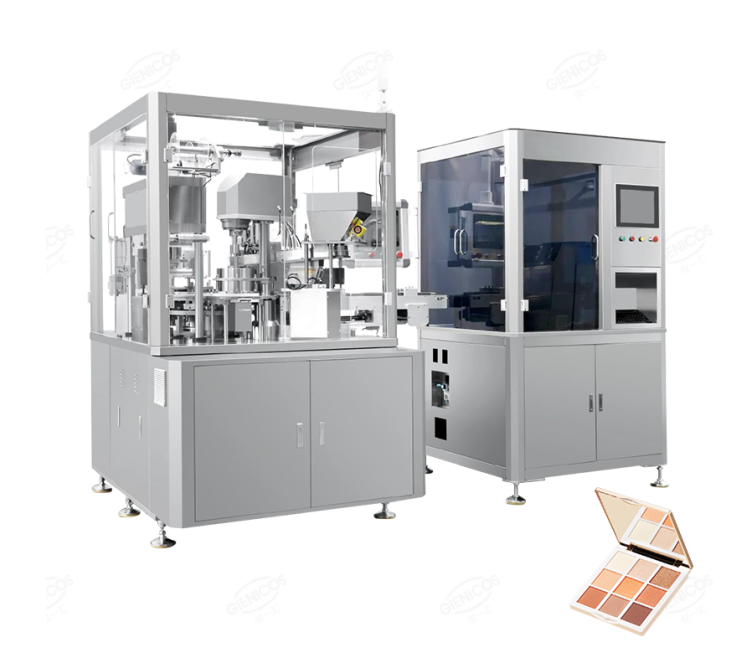
Do your pressed powders look smooth when they leave the press but crack, glaze, or separate from the pan during packing and transport? These problems are rarely caused by pressure alone. Stable compact powder production depends on the relationship between the formula, powder preparation, filling method, pan tolerance, mold design, pressing curve, and downstream handling.
For cosmetic manufacturers, brand owners, and equipment buyers, the real goal is not simply to purchase a compact powder press machine. It is to build a repeatable process that produces the required payoff, surface appearance, hardness, and drop resistance across every shade and package format. The following points explain how to evaluate that process before finalizing a production line.
Start With the Finished Product Standard
Equipment selection should begin with an approved product standard. Face powder, blush, contour, and eyeshadow may all use pressed powder, but they can require very different density, pickup, payoff, and surface finishes. A compact that feels firm in the pan may still release too little product, while a softer cake may give strong color but fail a drop test.
Define measurable acceptance criteria before setting up the compact powder press machine. These may include target weight, weight tolerance, cake height, surface flatness, hardness range, color appearance, pan adhesion, and resistance to cracking after assembly and transport. The standard should also identify how many samples will be checked and when the checks will occur.
Check Formula Readiness Before Pressing
A compact powder press machine cannot correct a powder blend that is not ready for stable compaction. Particle size distribution, binder level, oil content, pigment load, moisture, and mixing uniformity all affect how the powder flows and responds to pressure. Even small formula changes between shades can alter filling behavior and cake strength.
Before production, confirm that mixing, pulverizing, and sifting create a consistent feed material. Lumps or large particles can cause rough surfaces and local weak points. Too much fine powder may reduce flow, while an uneven binder distribution can produce cakes that are hard in one area and fragile in another.
Control Powder Feeding and Weight Distribution
Uniform filling is one of the most important conditions for stable pressing. If one side of a pan receives more powder than the other, the compact powder press machine may produce uneven density even when the total weight is correct. The result can be a tilted surface, edge cracking, poor pan adhesion, or inconsistent pickup during use.
Evaluate how powder moves from the hopper to the mold cavity. The feeding system should distribute material evenly without creating excessive dust or separating the blend. For multi-pan molds, compare the weight and surface condition of products from every position rather than checking only the center cavity.
Match the Mold to the Pan and Package
The mold is the connection between the compact powder press machine and the customer’s packaging. Pan diameter, depth, wall shape, bottom flatness, and dimensional tolerance all influence powder distribution and release. Decorative surfaces, logos, and nonstandard pan shapes add further requirements.
Send final packaging samples and tolerance drawings to the equipment supplier early. A machine trial based on a temporary pan may not represent the final production result. If pans come from more than one packaging supplier, samples from each source should be evaluated because small dimensional differences can affect loading, alignment, and pressing.
Use a Controlled Pressing Curve
Pressure value is important, but pressure sequence and holding time can be just as important. Some formulas perform better with staged pressing rather than one sudden force. A controlled curve allows air to escape and helps the cake form more evenly. It can also reduce surface defects and internal stress.
A servo-controlled compact powder press machine allows pressure values and time to be set through the control system and can support multi-stage control. The GIENICOS JGP-050SE, for example, uses adjustable servo pressure and is designed for face powder, eyeshadow, and blush applications. Its working cycle can handle one to four pieces at a time, depending on the configured process and mold.
Recognize Common Powder Pressing Defects
Cracking may come from low binder content, uneven filling, trapped air, excessive force, weak pan adhesion, or rough downstream handling. If cracks appear mainly at the edge, check mold alignment, powder distribution, and the relationship between cake diameter and pan geometry.
Capping or layer separation often suggests that air remains inside the powder or that the pressing curve is too aggressive. A glazed surface can indicate excessive pressure, an unsuitable pressing cloth, or a formula that becomes polished under compression. Low payoff may also result when the cake is pressed beyond the desired density.
Choose the Right Level of Automation
A laboratory or manual press can be suitable for formula development, sampling, and small batches. A semi-automatic compact powder press machine may offer a practical balance for frequent shade changes and moderate output. Fully automatic equipment can integrate pan loading, powder filling, pressing, collection, and visual detection when higher volume and reduced manual handling are priorities.
Automation should be selected according to the product mix, not only the highest expected speed. A factory producing many small color batches may value cleaning access and quick recipe change more than maximum output. A facility running a limited number of stable products may gain more from automatic pan loading and consistent cycle control.
Plan Cleaning and Shade Changeovers
Color carryover is a major risk in pressed powder production. Residual pigment in the hopper, powder path, pusher, mold area, collection section, or surrounding machine surfaces can contaminate the next batch. The risk becomes more visible when changing between dark and light shades.
Before purchasing a compact powder press machine, ask for a complete cleaning demonstration. Identify which parts contact the product, which parts can be removed, how remaining powder is collected, and how operators confirm that the machine is ready for the next shade. Cleaning time should be included when calculating daily capacity.
Calculate Real Production Capacity
Machine cycles per minute do not equal finished saleable output. Actual capacity depends on pans per mold, feed cycles, pressing time, loading method, product inspection, shade changes, cleaning, operator speed, and downstream assembly. Scrap and startup adjustment must also be included.
Build a capacity estimate around the planned SKU mix. For each product, calculate accepted pieces per cycle and multiply by realistic operating time. Then subtract planned cleaning, mold changes, sampling, maintenance, and normal stoppages. This gives procurement teams a better basis for comparing one compact powder press machine with another.
Verify the Process Before Shipment
Factory acceptance testing should use the customer’s actual powder and final pans whenever practical. The trial should cover more than a short demonstration. Run enough material to observe feeding stability, repeated pressure control, pan handling, surface quality, weight consistency, cleaning, and restart performance.
Agree on acceptance criteria in advance and collect samples from different mold positions and production times. Check the products immediately after pressing and again after assembly, conditioning, and transport simulation when relevant. Operators should also review recipe management, alarm handling, mold change, cleaning, and routine maintenance.
The purpose of the test is to confirm that the compact powder press machine can support the agreed process window. It is also the right time to close gaps in packaging tolerance, formula preparation, spare tooling, and operator training before the equipment reaches the production site.
Build a Repeatable Powder Pressing Process
Reliable compact cosmetics production comes from controlling the complete process, not from maximizing pressure or speed. Formula preparation, uniform feeding, suitable pans and molds, a tested pressing curve, careful handling, and clear quality checks must work together.
GIENICOS develops powder preparation and pressing solutions for products such as face powder, blush, and eyeshadow. Depending on the required batch size and automation level, the project can be configured around laboratory development, semi-automatic production, or servo robotic operation.
If you are planning a new compact powder line, prepare your formula type, pan drawings and samples, target output, shade-change plan, and acceptance standard. GIENICOS can use this information to evaluate the compact powder press machine, tooling, trials, and supporting equipment needed for your production process.
Post time: Sep-17-2026