
Are broken lipstick bullets, scratched surfaces, or slow manual release reducing the yield of your production line? These problems often appear after filling and cooling, but the root cause may be an unsuitable lipstick demolding machine, mold system, or cooling process.
A buyer should not select a lipstick demolding machine by speed alone. The equipment must match the mold material, lipstick shape, formula hardness, package dimensions, cooling conditions, and target output. A good match helps release each bullet with less damage and keeps the next packaging step stable.
Start With the Mold System
The mold is the first technical point to confirm. A lipstick demolding machine designed for an aluminum mold may use a different release method from a machine built for silicone. Sending only the final lipstick drawing is not enough. The supplier should review the complete mold, cavity count, bullet diameter, bullet length, base structure, and package holder.
Metal Mold Release
Metal molds are common in traditional lipstick production. The product is filled, cooled, released, and then placed into the lipstick mechanism. A metal-mold lipstick demolding machine may use air blowing or a combination of air and vacuum to separate the lipstick from the cavity.
The release force must be stable. Too little force can leave the bullet inside the mold. Too much force can mark the surface or damage a soft formula. Buyers should also check whether the lipstick demolding machine includes shell positioning and a screw-down unit. Combining these steps can reduce manual handling and improve line continuity.
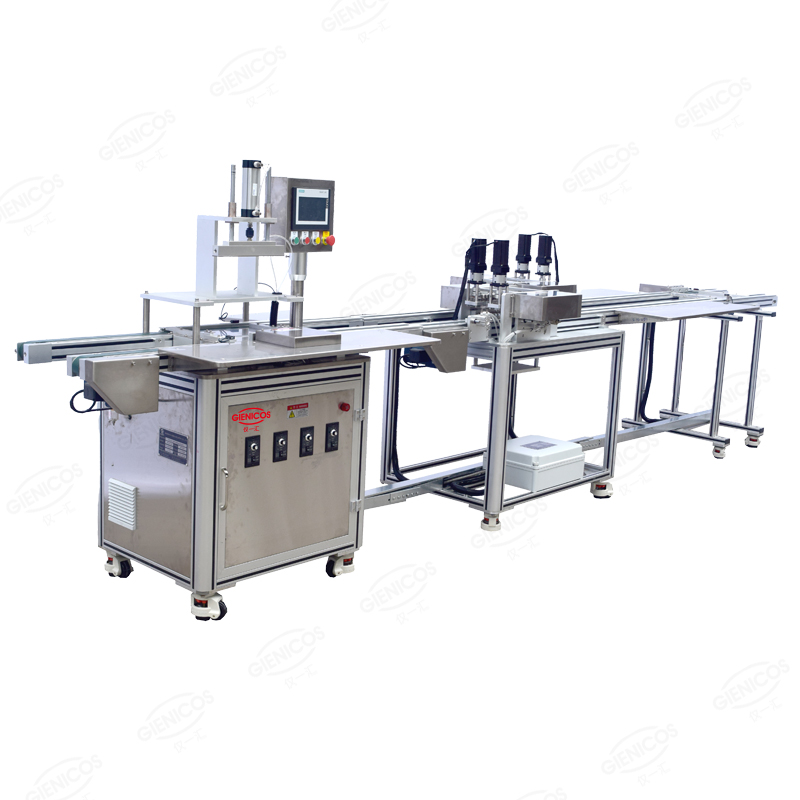
Half Silicone Mold Release
Half-silicone molds can support special shapes while keeping part of the mold structure rigid. They normally need controlled vacuum release. The lipstick demolding machine must align the package and mold before vacuum is applied. Poor alignment may bend the bullet or pull it from the wrong point.
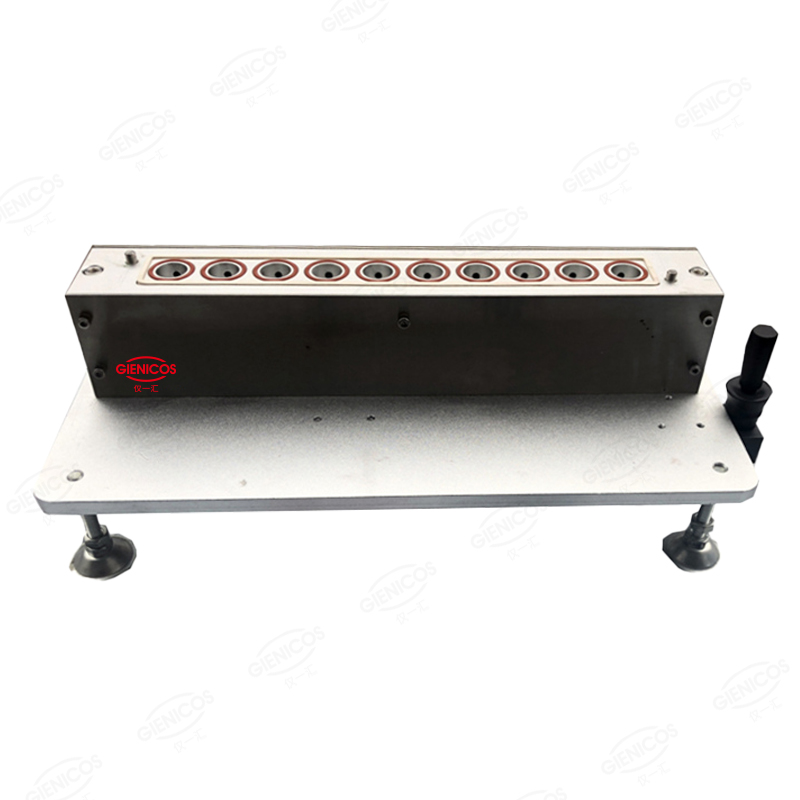
Full Silicone Mold Release
Full-silicone molds are often selected for detailed shapes, logos, or special lipstick designs. They require a lipstick demolding machine that can create stable vacuum and support the bullet during removal. The fixture should hold the package in the correct position without scratching its surface.
For product development, a small pneumatic unit may be enough. GIENICOS offers a laboratory lipstick demolding machine for full-silicone molds that releases four pieces at a time and operates with compressed air. Higher-volume projects may require automatic filling, cooling, demolding, and screw-down functions in one line.
Match Automation to the Production Stage
Laboratory and Sample Production
A compact lipstick demolding machine is suitable for formula trials, shade approval, mold testing, and small product launches. It allows the R&D team to evaluate a process that is closer to commercial production than hand release.
Semi Automatic and Standalone Production
However, the buyer must calculate the transfer time between processes. If operators move molds manually, production speed may vary. The lipstick demolding machine must also accept the same cavity count and cycle rhythm as the upstream equipment. A mismatch can create queues after cooling or leave the demolder waiting for material.
Automatic Integrated Lines
High-volume production may benefit from an automatic lipstick demolding machine that combines filling, cooling, demolding, and shell rotation. GIENICOS offers silicone-mold equipment for regular, slim, mini lipstick, lip balm, and foundation stick applications with change parts. Its listed capacity is 1,000 to 1,300 pieces per hour, depending on the configuration and production conditions.
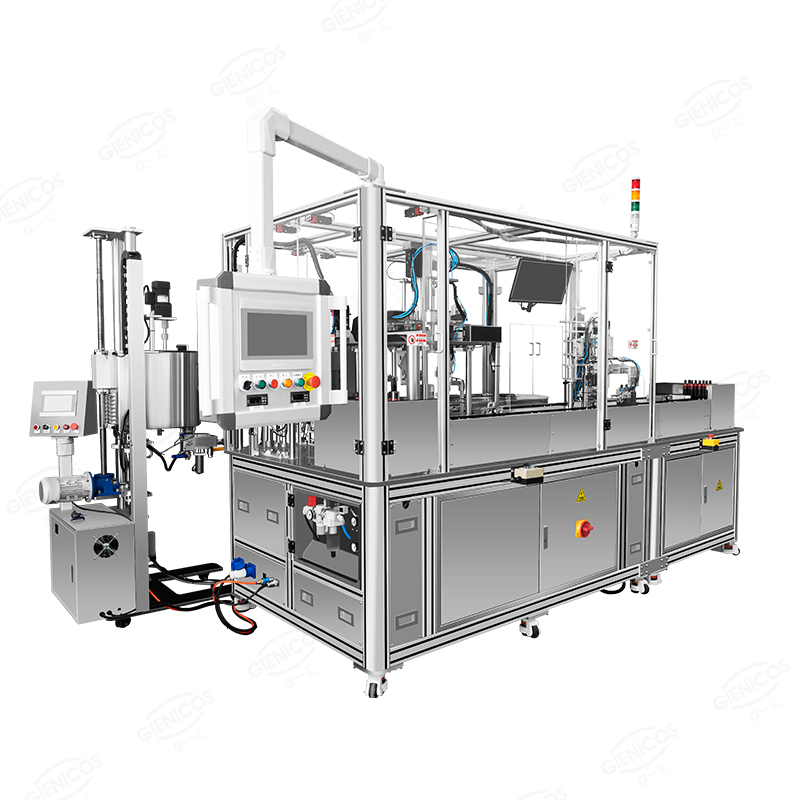
An automatic lipstick demolding machine should not be evaluated as an isolated station. The buyer should review the full cycle time, mold transport, cooling time, product transfer, screw-down control, operator access, and reject handling. The slowest station sets the practical output of the line.
Judge Release Quality Before Rated Speed
A supplier may quote cycles per minute, but accepted output is more important than mechanical speed. A fast lipstick demolding machine creates little value if bullets break, lean, scratch, or separate from the package during transfer.
Ask the supplier to test the lipstick demolding machine with your actual formula, mold, and packaging. Run enough cycles to show stable performance after normal operating conditions are reached. Check the first, middle, and final pieces instead of reviewing only a short demonstration.
During the test, inspect the following points:
Bullet shape remains complete after release
Surface gloss and molded details remain clear
No cracks appear at the bullet base
The package stays centered during insertion
The screw-down step reaches a repeatable position
The mold and fixture are not damaged
The reject rate is recorded under agreed test conditions
Review Cooling and Formula Conditions
Demolding performance depends on what happens before the product reaches the lipstick demolding machine. If the lipstick is too warm, it may bend or mark during release. If it is cooled too aggressively, the bullet may crack or develop surface defects.
Ask for a complete trial that includes filling and cooling when possible. This shows whether the lipstick demolding machine works with the real product, not only with an empty mold or a harder sample formula. If several formulas will run on the same line, test the softest, hardest, and most detailed products.
Check Packaging and Fixture Compatibility
Share samples from the approved packaging supplier before lipstick demolding machine design is complete. If the package is still under development, define the dimensional tolerance and confirm who will approve the final fixture. A fixture built around an early sample may not fit the mass-production package.
For multi-SKU factories, ask how long a size change takes and which tools are required. Confirm the price and lead time for additional holders, vacuum heads, mold plates, and screw-down parts for the lipstick demolding machine. Quick change parts can reduce downtime when operators can identify and install them correctly.
Compare the Total Production Cost
Purchase price is only one part of the investment. A lower-cost lipstick demolding machine may require more operators, create more rejects, or take longer to change between products. Buyers should compare the cost per accepted lipstick over the expected operating period.
For each lipstick demolding machine, include labor, compressed air, electricity, spare parts, change parts, cleaning time, maintenance, and lost production during downtime. Also calculate the value of damaged formula and packaging. Premium lipstick components can make a small reject rate expensive.
A modular lipstick demolding machine may offer better long-term value if the factory expects more molds, product shapes, or automation later. Ask whether the equipment can connect with existing filling and cooling machines and whether the control system has space for future stations.
Confirm Utilities Layout and Safety
Before ordering, verify voltage, phase, frequency, compressed-air pressure, air volume, floor space, access doors, and maintenance clearance. Vacuum release depends on stable air supply. A lipstick demolding machine may perform poorly if the factory cannot maintain the required pressure during peak production.
Review the lipstick demolding machine loading points and moving parts. Guards, emergency stops, sensors, and clear fault messages should support safe daily use. The layout should also leave enough space to remove molds, change fixtures, clean the station, and service pneumatic parts.
Set Factory Acceptance Standards Before Production
A practical FAT for a lipstick demolding machine should confirm:
Approved formula, mold, and packaging samples
Release method and cavity count
Output under stated cooling conditions
Acceptable bullet appearance and reject limits
Fixture and changeover performance
Alarm, guard, and emergency-stop functions
Cleaning, maintenance, and operator training
Manuals, drawings, spare-parts list, and packing check
The delivery schedule should include sample approval, lipstick demolding machine design confirmation, assembly, internal testing, FAT, correction time, packing, and shipment. Custom molds and fixtures may affect the final lead time, so packaging decisions should not be left until the end.
Evaluate Supplier Support
A capable lipstick demolding machine supplier should understand filling, cooling, mold release, and packaging as one process. Ask how the supplier diagnoses defects and whether it can test your actual materials. Review the available remote support, training, spare-parts service, and upgrade options.
The supplier should also explain which lipstick demolding machine is appropriate for your production stage. A laboratory project should not be pushed toward a full automatic line, while a high-volume factory should not receive a solution that depends on excessive manual handling.
Why Work With GIENICOS
GIENICOS has provided cosmetic equipment design, manufacturing, automation, and system solutions since 2011. Its product range covers material preparation, heating, filling, cooling, molding, demolding, packing, and labeling. This process knowledge helps the team review how a lipstick demolding machine will work with the equipment before and after it.
GIENICOS offers lipstick demolding machine options for metal molds, half-silicone molds, full-silicone molds, laboratory testing, standalone production, and integrated automatic lines. Equipment can be reviewed around the buyer’s formula, mold, package, output target, and factory layout.
If you are planning a new lipstick line or trying to reduce damage during mold release, prepare your product samples, mold details, package drawings, target output, and utility information. Contact GIENICOS to discuss a lipstick demolding machine and testing plan based on your actual production conditions.
Post time: Oct-09-2026