
Are powder loss, unstable fill weight, and slow jar assembly blocking your loose powder growth? A loose powder filling machine must fit the formula, jar, inner cap, puff, outer cap, inspection plan, and cleaning routine. If one step is poorly matched, the line can lose output and create rework.
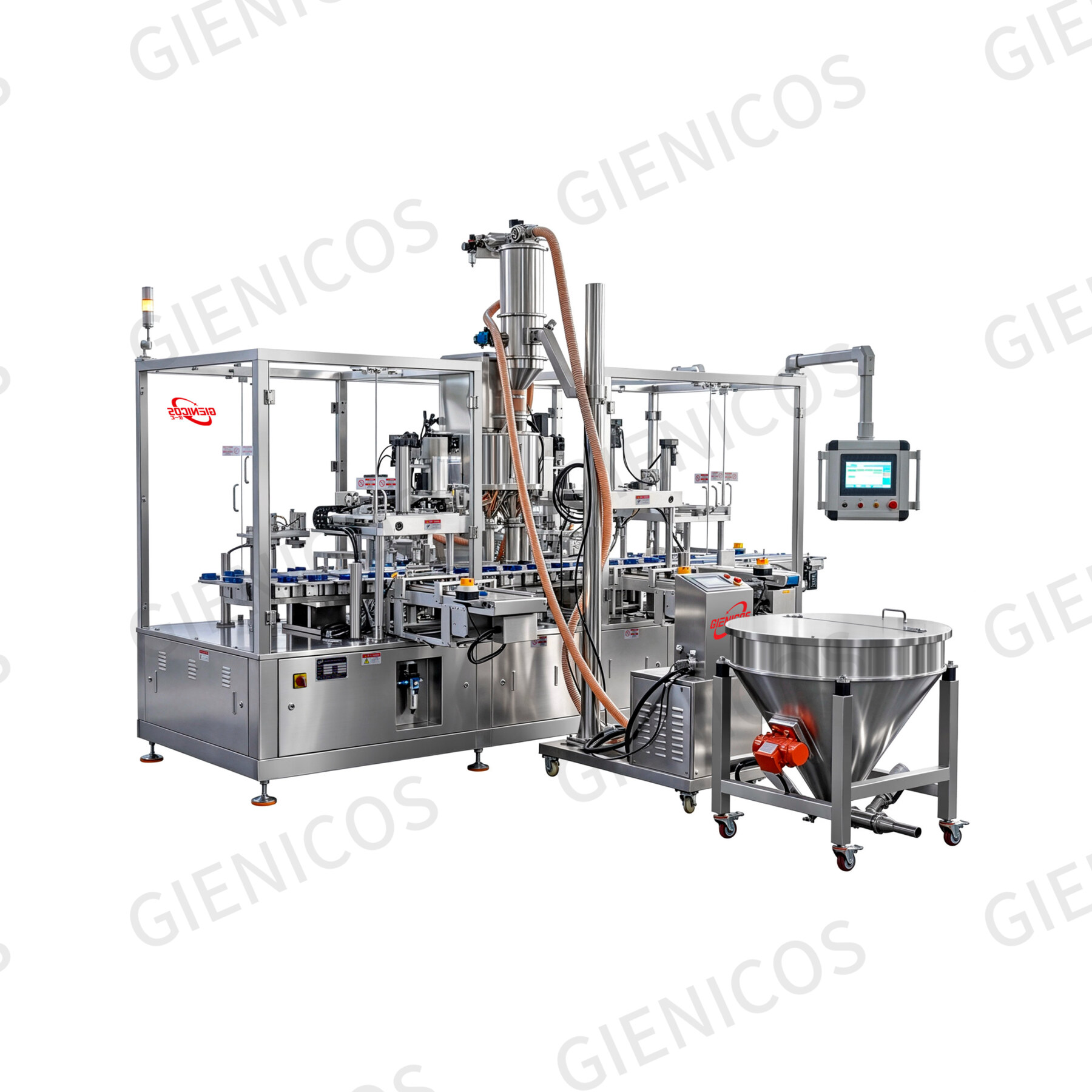
For overseas cosmetic brands and OEM or ODM factories, the decision should begin with the real product and package. The latest GIENICOS double-nozzle loose powder filling machine combines filling, sampling checks, inner-cap handling, puff loading, outer-cap pre-screwing, final capping, NG separation, and dust extraction.
Define the Production Goal Before Comparing Machines
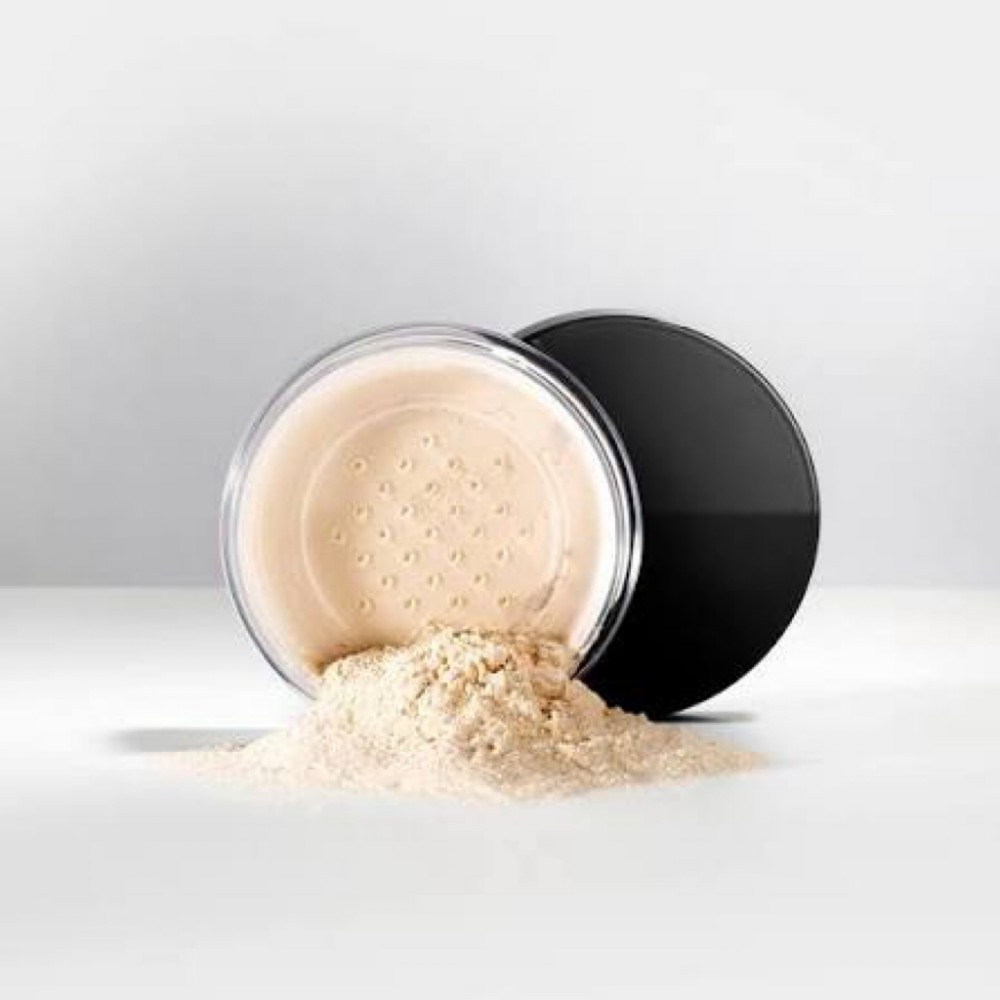
Select a loose powder filling machine around the products that will actually run. Face powder, setting powder, translucent powder, and other fine powders can feed and settle differently. Particle size, flow, moisture, oil content, and storage condition matter. Send representative samples instead of relying on a product name.
Define the fill weight, jar opening, daily volume, shade count, batch size, and changeover frequency. GIENICOS lists a 2 to 20 g filling range for the double-nozzle loose powder filling machine. Confirm that range with the buyer’s powder, container, difficult shades, and low-flow formulas.
Set an Accepted Output Target
The product page lists 45 to 50 pieces per minute, while noting that actual capacity depends on material and packaging. Build the business case around accepted units, not empty cycles. Test the loose powder filling machine through filling, component loading, capping, inspection, and discharge to reveal the slowest station.
Match the Filling Method to Powder Behavior
The GIENICOS loose powder filling machine uses vacuum powder feeding and vibration-assisted filling. A 150 L hopper supplies two filling nozzles. During testing, observe whether material feeds steadily, settles evenly, and avoids buildup around the nozzle and sealing area during both short and continuous runs.
GIENICOS lists accuracy at no more than plus or minus 0.2 g, but states that results depend on the supplied powder. Define the sample count, timing, and acceptance method. Check the loose powder filling machine at startup, after hopper refilling, and near the end of a run.
Review Dust Control at Every Transfer Point
Dust control should cover more than the filling nozzle. The GIENICOS configuration connects filling, inner-cap pressing, and finished-product conveying to an external centralized dust collector. Ask to see these points working together. A loose powder filling machine must limit powder spread while remaining accessible for inspection, cleaning, and maintenance.
Check Packaging Compatibility as a Complete Sequence
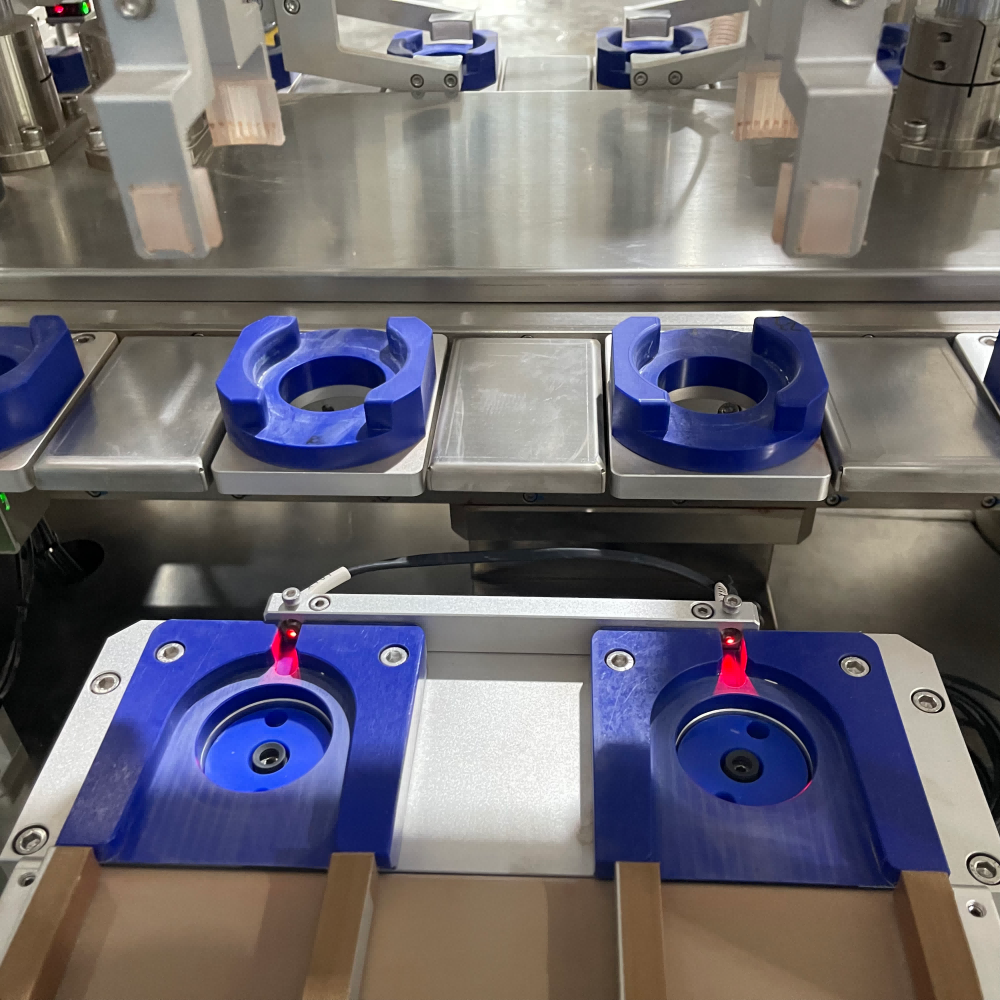
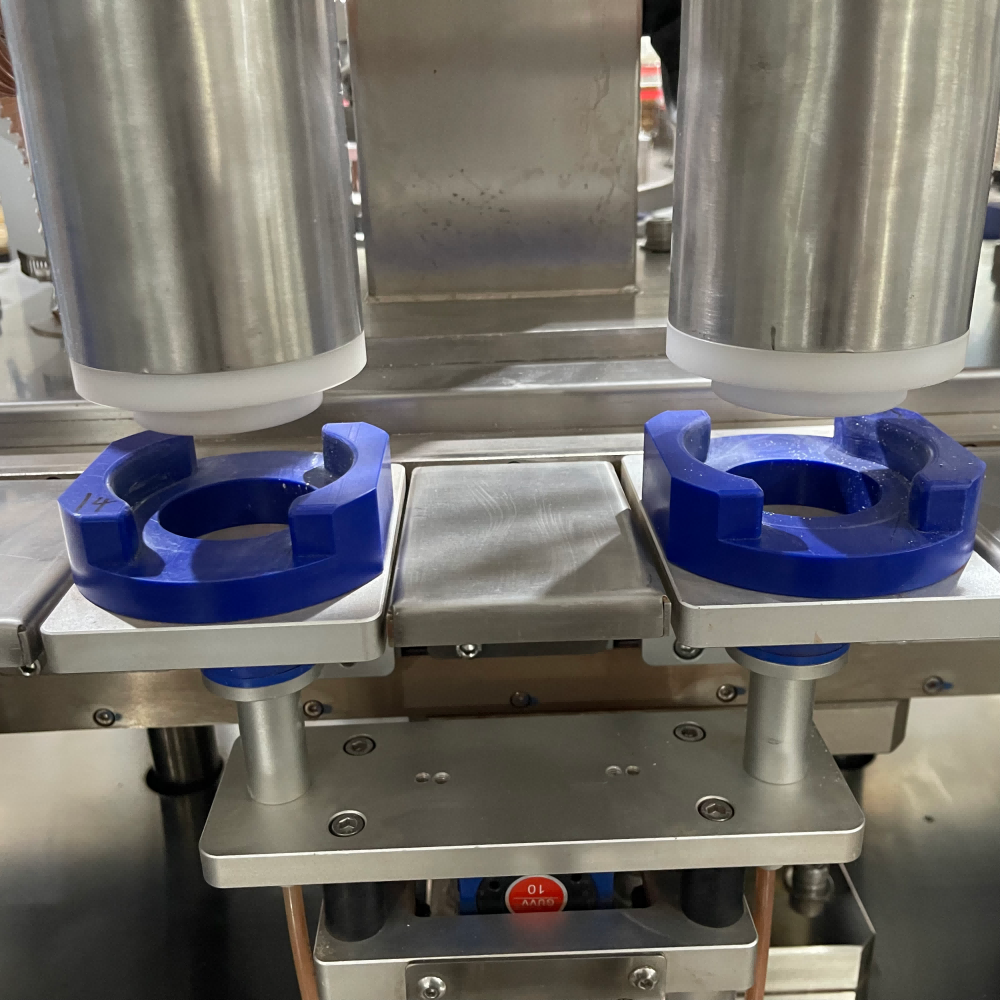
An integrated loose powder filling machine depends on every package part. The GIENICOS process includes manual bottle loading, servo bottle loading, presence detection, inner-cap loading and pressing, manual puff loading, outer-cap pre-screwing, and final tightening. Each step should be tested as one connected sequence.
Provide production-grade jars, inner caps, puffs, and outer caps for testing. Confirm dimensions, tolerances, surfaces, cap threads, and component presentation. Small variation can affect pickup, placement, pressing, and tightening. Approve the loose powder filling machine against the commercial packaging range, not one perfect sample.
Identify Manual Work and Staffing Needs
The official specification lists four operators and includes manual powder-puff loading. Review operator positions, component replenishment, and work at different speeds. The loose powder filling machine automates several handling steps, but staffing still depends on bottle feeding, puff loading, quality checks, material supply, and packing.
Review Layout and Utilities
Place the loose powder filling machine on the proposed factory layout before approval. Allow room for operators, component supply, cleaning access, the 150 L hopper, discharge, and the external dust collector. Confirm electrical and air requirements in the final technical agreement, including local connection points and responsibilities.
Verify Transfer Capping and Reject Handling
A servo-driven precision ring chain moves products between stations. Servo modules also support bottle loading, inner-cap loading, and outer-cap pre-screwing. During testing, confirm that the loose powder filling machine keeps each container stable and correctly positioned through movement, pressing, inspection, and capping.
The outer-cap module pre-screws caps before final tightening, and presence detection checks components. Qualified products move to the finished-product conveyor while NG units take a separate path. Ask GIENICOS to demonstrate the loose powder filling machine with a missing jar, missing cap, incorrect component, and rejected unit.
Understand the Sampling Check Weighing Method
The GIENICOS loose powder filling machine uses sampling check weighing. The official page states that this is random sampling, not 100 percent online weighing. Procurement and quality teams should define sample frequency, acceptable range, response to a failed result, and records required for each batch.
If every unit must be weighed, discuss it as a separate project condition. If sampling is acceptable, decide who takes samples, whether the line stops, and how settings are corrected. The loose powder filling machine should fit the buyer’s quality method, not create an unclear inspection step after installation.
Calculate Cost Beyond the Purchase Price
The total cost of a loose powder filling machine includes tooling, component feeding parts, the external dust collector, utilities, freight, installation, training, spare parts, and local labor. Add the sample powder and packaging used for engineering tests and FAT. These items can materially change the project budget.
Operating cost also depends on powder loss, cleaning, changeovers, jams, rejects, and staffing. Nominal speed creates little value if the line stops often for shade cleaning or cap adjustment. Compare each loose powder filling machine by accepted output per shift and the time between SKUs.
Plan Cleaning and Shade Changeovers
Request a cleaning demonstration covering the hopper, feed path, filling area, seals, inner-cap station, conveyor, and dust connection. Record removed parts, tools, and hidden-area checks. The loose powder filling machine must support the approved cleaning method and shade sequence, especially dark-to-light changeovers.
Build a Factory Acceptance Test Around Real Risk
Recent GIENICOS news shows FAT covering operation, filling, station coordination, packaging handling, continuous running, and adjustment. Use the same approach for the loose powder filling machine. Agree on samples, packages, speed, fill range, run time, and acceptance rules before the test begins.
Run enough material to observe hopper refilling, station balance, dust extraction, and repeatability. Check the loose powder filling machine at several fill weights when needed. Collect results from the start, middle, and end, then record approved settings and change parts for each package.
Include Failure and Recovery Checks
A useful FAT covers normal production and controlled faults. Confirm the response to an absent bottle, missing inner cap, missing outer cap, or rejected unit. Review alarms, restart steps, and product tracking. The loose powder filling machine should recover without mixing accepted and rejected units.
Confirm Customization Delivery and Support Scope
Turn product needs into a technical agreement. List powders, fill weights, packages, tooling, electrical supply, air supply, dust-collector interface, factory layout, and documents. State which items are included or local. The loose powder filling machine quotation should separate standard equipment from customization.
Set milestones for design approval, sample receipt, assembly, trials, FAT, packing, and shipment. Confirm installation duties, training, support, spare parts, and maintenance information. A clear plan reduces the risk of receiving a loose powder filling machine that is complete but not site-ready.
Check Documents and Spare Parts
Before packing, verify the operating manual, electrical information, approved settings, tooling list, and FAT record. Ask for recommended wear parts and critical spares for the loose powder filling machine. Match part names to drawings or labels so the overseas maintenance team can identify and reorder them without delay.
Evaluate the Manufacturer as a Process Partner
GIENICOS positions itself as a cosmetic machinery manufacturer and automation solution provider. Founded in 2011, it covers material preparation, filling, cooling, compacting, packing, and labeling. Its site also lists modularization, customization, CE certificates, 12 patents, and service coverage in more than 50 countries.
That range matters when a loose powder filling machine connects with powder preparation or downstream packaging. Buyers can discuss one system instead of isolated machines. Still, the investment decision should depend on documented tests, approved packages, clear responsibilities, and written acceptance criteria.
Choose a Line That Can Repeat the Approved Process
A successful loose powder filling machine project starts with real samples and a complete package set. It needs clear output, accuracy, dust-control, staffing, inspection, changeover, and FAT rules. The best choice is the system that can repeat the accepted process across planned products.
Prepare powder samples, jar drawings, closure parts, puff details, fill weights, the SKU plan, target capacity, quality rules, and site utilities. Ask GIENICOS to evaluate the double-nozzle loose powder filling machine against those conditions and prepare a practical test plan for cost approval and final acceptance.
Post time: Nov-06-2026