
How to Choose a Lip Balm Filling Machine for Hot Fill Production
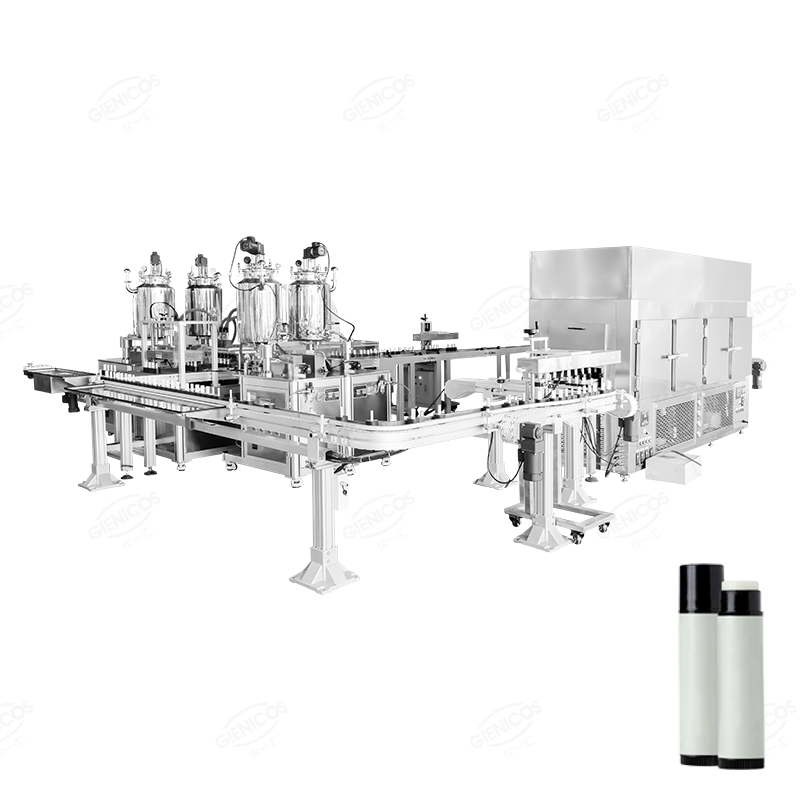
Are uneven surfaces, blocked nozzles, or slow cooling making it difficult to compare equipment for a new lip balm line?
A lip balm filling machine must control temperature, dose accurately, and move each container through cooling without damaging the finish. The wrong system can increase material loss, labor, cleaning time, and delivery risk.
For a B2B buyer, the best lip balm filling machine fits the formula, package, output target, layout, and changeover plan. This guide explains what to check before approving a hot fill line.
Define the Formula and Package First
The supplier needs more than a product name. Lip balm, sun stick, deodorant stick, cleansing balm, and similar wax products can have different melting points, viscosities, cooling behavior, and surface requirements. These details affect every part of the lip balm filling machine.
Before selecting a lip balm filling machine, prepare a technical brief that covers the following items
Formula type and normal filling temperature
Fill volume and acceptable weight tolerance
Container material, diameter, height, and opening size
Expected output per minute or per shift
Number of formulas, colors, and package sizes
Required cleaning and changeover method
Available power, compressed air, floor space, and room conditions
This information helps the supplier size the lip balm filling machine correctly. It also prevents late design changes after the machine frame and filling system have already been built.
Test the Actual Formula and Containers
A catalog cannot show how a specific balm will behave during heating, filling, cooling, and reheating. Ask the supplier to test the formula and package when possible. If the formula cannot be sent, provide its viscosity range, filling temperature, solidification behavior, and safety data.
The test should show more than a few successful pieces. Check the start of the run, normal production, a short stop, restart, and the finished product after cooling. A useful test of a lip balm filling machine should reveal weight variation, dripping, bubbles, sink marks, container deformation, and surface quality.
Choose the Right Automation Level
The automation level of a lip balm filling machine should follow the production plan. Too much automation raises capital cost and may make frequent changes harder. Too little can create labor bottlenecks and limit future orders.
Semi Automatic Systems for Flexible Batches
A semi-automatic lip balm filling machine can suit pilot production, seasonal products, frequent formula changes, or several package sizes. Operators may place containers or handle capping while the machine controls heating and dosing. This can lower the initial investment and simplify small batches.
Buyers should still calculate labor and cycle time. A low purchase price for a lip balm filling machine may not reduce total cost if several operators are required at filling, cooling, capping, and packing stations.
Automatic Lines for Stable High Volume Orders
An automatic lip balm filling machine can connect feeding, filling, cooling, surface reheating, capping, and labeling. It suits stable packaging and repeated high-volume orders. Its value comes from balanced line flow, not filler speed alone.
Ask which process sets the real output. Cooling, container feeding, and capping can be slower than the lip balm filling machine. Request a tested line speed using a similar formula and package, including normal stops and bulk refilling.
Match Heating Filling and Cooling as One Process
A lip balm filling machine cannot be evaluated as an isolated dosing unit. Heating, mixing, filling, cooling, and surface finishing must work together. A stable process keeps the formula fluid enough to fill while limiting long exposure to heat.
Check Temperature Control and Mixing
Ask how the tank, pipe, valve, and nozzle temperatures are controlled. Cold spots can cause thick flow or blockages, while excessive heat may affect the formula. Adjustable mixing helps keep ingredients evenly distributed, but the speed should suit the product and avoid adding air.
A suitable lip balm filling machine should let operators monitor key temperatures clearly. Confirm preheat time and how much material remains in the tank and piping after a batch.
Review Filling and Surface Quality
Servo-driven piston or pump systems can support repeatable dosing, but buyers should request a written accuracy range and the conditions used to measure it. Accuracy may change with fill volume, temperature, container position, and formula behavior.
Bottom filling can help some products fill cleanly. After initial cooling, a reheating step may also improve the top surface when shrinkage creates a dip or uneven finish. The correct method depends on the formula and package, so it should be confirmed during testing of the lip balm filling machine.
Size the Cooling System for the Product
Cooling is often the longest part of a hot fill line. If the cooling tunnel is too short or the temperature is poorly controlled, the line may need to slow down. If cooling is too aggressive, the finished balm may develop surface or structural defects.
Ask how cooling time was calculated for your fill volume and container. Confirm the conveyor length, temperature range, airflow, and cleaning access. The cooling section of the lip balm filling machine must fit the layout and leave room for maintenance.
Compare Total Cost Instead of Machine Price
The purchase price of a lip balm filling machine is only one part of the investment. Buyers should estimate the cost per acceptable finished unit over several years.
Include labor, product loss, energy use, cleaning time, change parts, maintenance, shipping, installation, and downtime. A lip balm filling machine with better dosing control or faster changeovers may cost more at first but reduce daily operating cost.
Material recovery also matters. Ask how much balm remains in the tank, pump, valve, and hose at the end of a batch. For frequent color or formula changes, small hold-up volume and quick-release connections can improve the return from a lip balm filling machine.
Plan for Cleaning and Changeovers
Factories that run many SKUs should check how product contact parts are removed and cleaned. Confirm whether operators need tools, how long the lip balm filling machine remains hot, and which seals or valves require normal replacement.
Request a changeover demonstration with two package sizes or formulas. It should show draining, cleaning, replacing parts, loading a recipe, and producing the first acceptable unit. This gives a more realistic view of lip balm filling machine capacity than rated speed alone.
Check Controls Safety and Maintenance
Operators should be able to set temperature, filling volume, and conveyor speed without complex manual adjustment. Recipe storage on a lip balm filling machine can reduce setup errors, while clear alarms can shorten troubleshooting.
A lip balm filling machine also needs guards, emergency stops, heat protection, and safe maintenance access. Ask the supplier to identify hot surfaces, moving parts, and required operator procedures before delivery.
Maintenance access affects uptime. Inspect the pumps, sensors, heaters, valves, and electrical components inside the lip balm filling machine. Confirm the recommended spare parts and replacement cycle for common wear parts.
Set Acceptance Standards Before Production
The purchase contract should define what the lip balm filling machine must achieve. Clear standards reduce disputes and prevent important tests from being delayed until shipment.
A factory acceptance test should cover
Output with the agreed formula and package
Filling accuracy across a continuous run
Temperature stability at the tank and filling points
Cooling time and finished surface quality
Container feeding and capping performance when included
Alarm functions, guards, and emergency stops
Cleaning, recipe change, and format change time
Manuals, drawings, spare parts, and training materials
For remote acceptance, request an uninterrupted video that shows the bulk material, machine settings, production count, weighing method, rejected pieces, and finished products. A short edited clip is not enough to confirm lip balm filling machine performance.
Confirm Delivery Installation and Support
Lead time should cover requirement approval, sample testing, design, sourcing, assembly, programming, factory testing, packing, and shipping. Custom containers or a full line may require more engineering than a standard lip balm filling machine.
Agree on milestone dates and required documents. Delays in a lip balm filling machine project often begin when bottle samples, formula data, layout drawings, or electrical requirements are incomplete.
Before ordering, confirm who will handle installation, commissioning, training, remote support, warranty service, and spare-parts shipment. Overseas buyers should also ask how faults in the lip balm filling machine are diagnosed remotely.
Choose a Supplier That Understands Hot Fill Production
A capable supplier should review the full process before quoting a lip balm filling machine. The discussion should cover formula behavior, package handling, cooling, cleaning, line balance, utilities, and future expansion.
GIENICOS has developed cosmetic production equipment since 2011. Its range covers material preparation, heating, filling, cooling, capping, packing, and labeling, including semi-automatic and automatic hot fill systems.
GIENICOS also supports modular and customized equipment. Its company profile reports CE-certified products, 12 patents, and service coverage in more than 50 countries. This background allows its team to assess a lip balm filling machine as part of a complete production process.
If you are planning a new lip balm line, prepare your formula data, container samples, output target, factory layout, and automation plan. Contact GIENICOS to test the application and discuss a lip balm filling machine configured for your actual production needs.
Post time: Sep-30-2026